Wahoo Elemnt Ace Review: Revisited in 2026
Price: £549 / $599.99 / €599.99 RRP (now widely discounted to around £375–£450)
Best For: Riders who want the biggest, most map-forward screen on the market
Screen: 3.8in colour touchscreen, the largest on any bike computer
Battery: Claimed 30 hours
Weight: 208g
Features: Wind sensor with Wind Dynamics, on-device routing, integrated bell, WiFi syn
When the Wahoo Elemnt Ace landed at the tail end of 2024, it arrived swinging. Sporting the largest screen ever seen on a cycling computer, a claimed 30-hour battery and a world-first wind sensor, it set out to wrestle the premium end of the market away from Garmin's Edge 1050 and Hammerhead's Karoo 3. We put nearly 500km on one at launch, riding local loops and far-flung Scottish gravel, and came away distinctly underwhelmed; it felt rushed, buggy and, frankly, too big. But we always said it was a device that firmware could rescue. So, two years and a stack of updates later, we've gone back to find out whether the Ace has finally grown into its potential.
Wahoo Elemnt Ace Review: The Lowdown
Wahoo's flagship GPS computer with a class-leading 3.8in screen
World-first onboard wind sensor feeding its Wind Dynamics metric
Claimed 30-hour battery, WiFi route sync and a genuinely handy bell
Launched late 2024 to a lukewarm reception; heavily updated since
Still a big, heavy unit at 208g, but the software has come a long way
Highs
Beautiful, detailed maps on a wide, immersive screen
Excellent turn-by-turn navigation with colour-coded climb chevrons
Firmware has clearer wind data and added real features
Street price has tumbled well below launch RRP
Lows
Still huge and heavy on the bars
Screen brightness and responsiveness trail rivals
Touchscreen misfires in the wet; rain lock is fiddly
Wind sensor still adds little in real-world crosswinds, or at all to be honest
Sensors still drop mid-ride and need a full reboot
Remains heavily reliant on the Wahoo app
What's Changed Since Launch
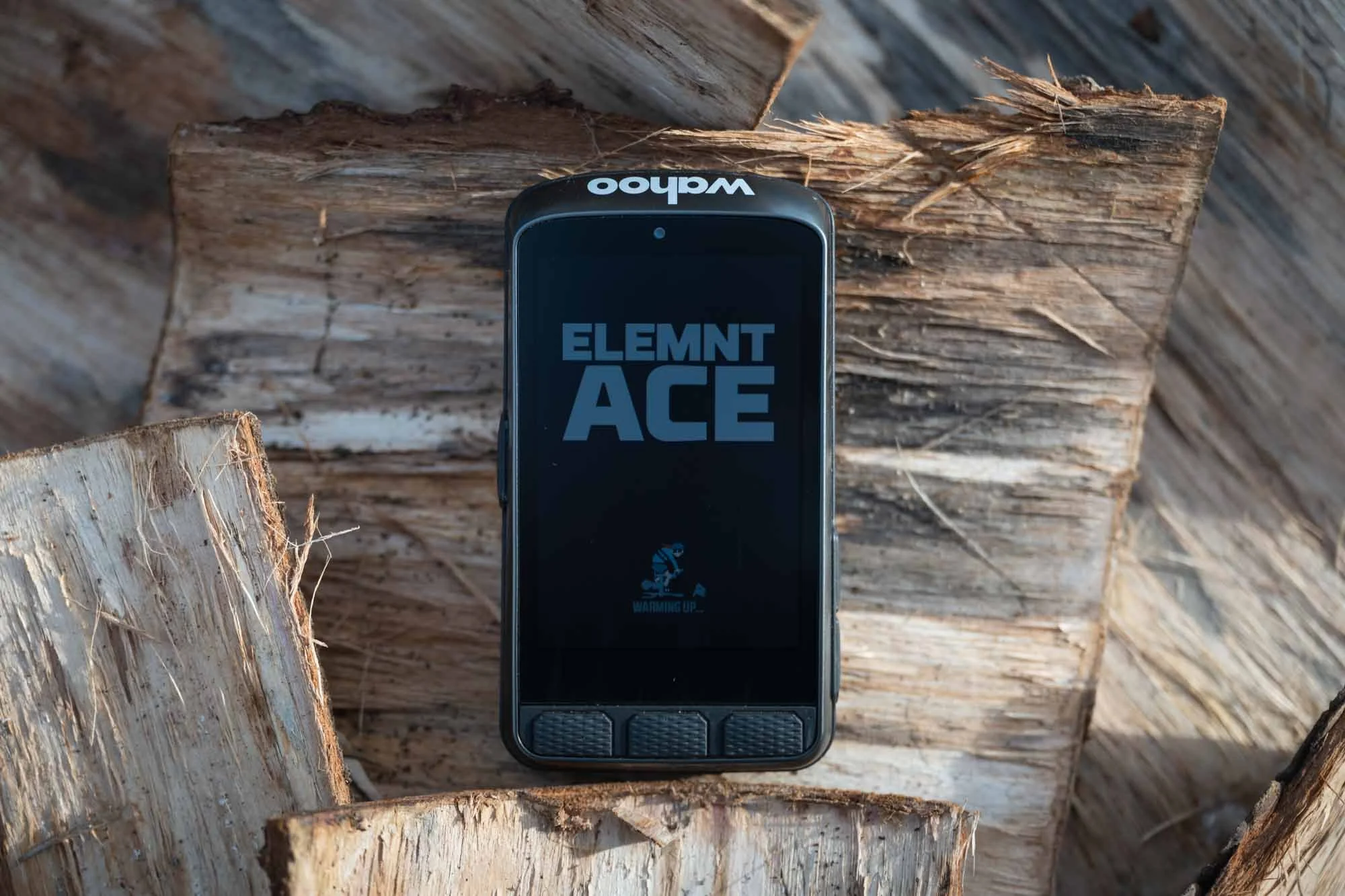
The headline of this revisit is simple: the Elemnt Ace of 2026 is a meaningfully better device than the one we reviewed in 2024. Wahoo always had a pipeline of updates in the works, and to their credit they've delivered. The Strava Live Segments and LiveTrack that were missing at launch have long since arrived, stability has improved through a run of bug-fix releases, and there's a raft of genuinely useful additions on top; custom waypoints pulled from Strava, Komoot and Ride with GPS, so you're alerted to water stops, food and hazards on route, expanded voice turn-by-turn navigation, and even USB access to your completed .FIT files. Wahoo has also broadened sensor support to a clutch of biometric devices, including CORE body temperature and sweat-analysis pods from the likes of FLOWBIO.
The frustration, of course, is that a lot of this should have been there on day one, and early adopters paid £549 to be late-stage testers. But if you're coming to the Ace fresh in 2026, you're getting a far more finished product, but is the lower price and updated firmware enough to make it more appealing than the alternatives?
Screen and Navigation
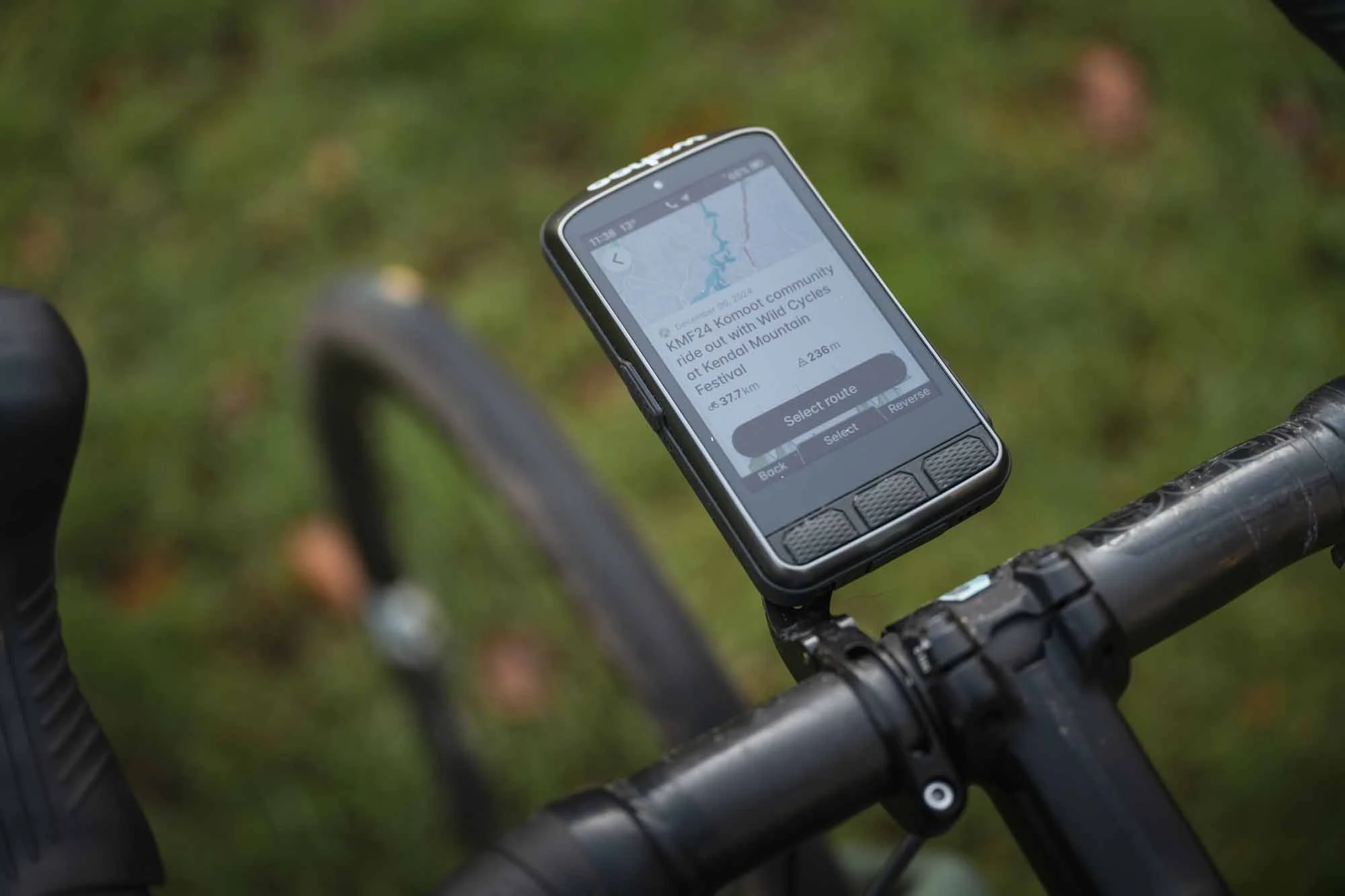
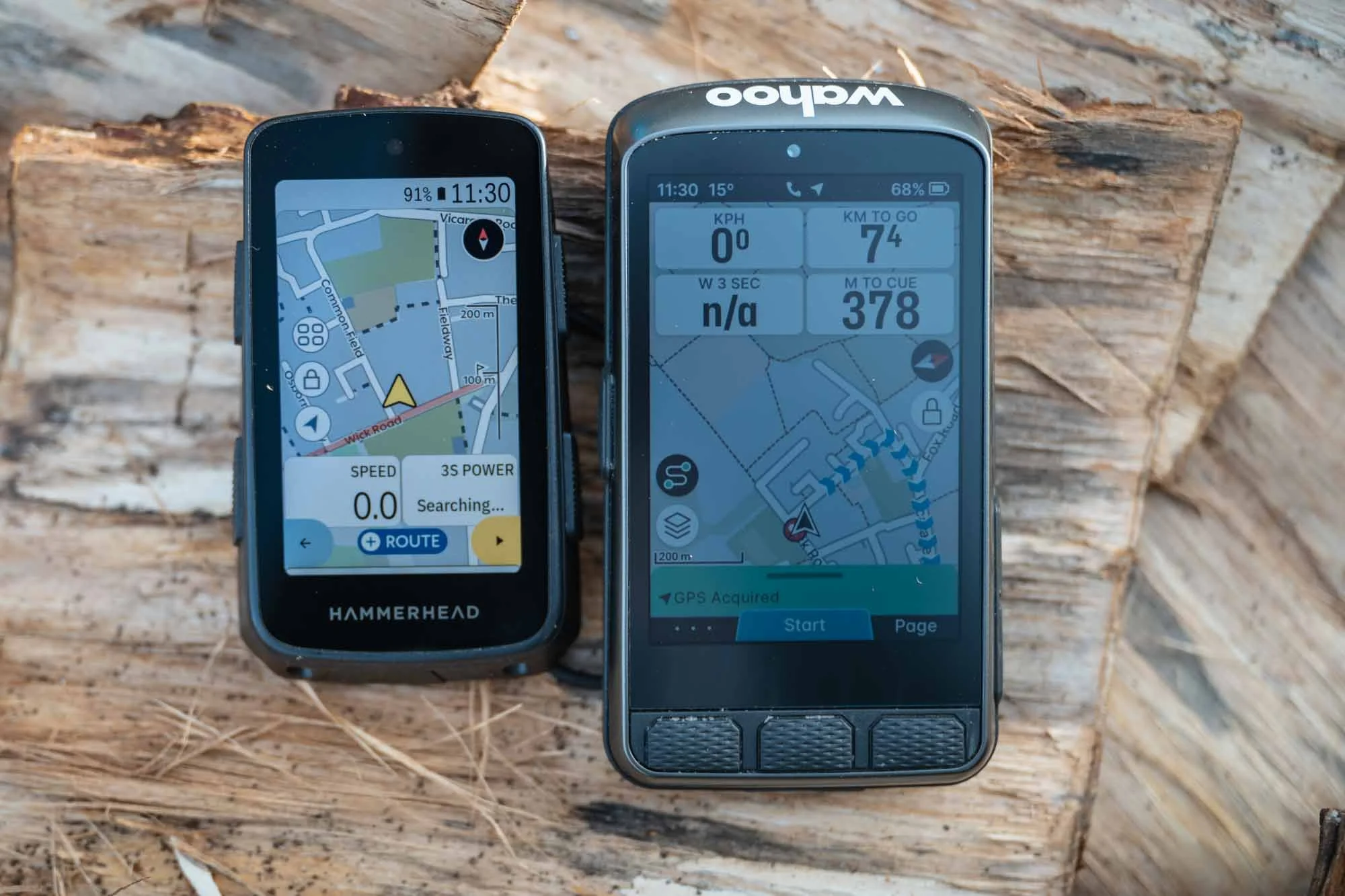
The mapping was always the Ace's trump card, and it remains superb. The maps are colourful and packed with detail without becoming overwhelming, and the unusually wide 3.8in screen gives you more peripheral view of the road ahead than the Karoo 3 or Edge 1050 can manage. Navigation is excellent; chevrons mark the route and change colour to flag the severity of climbs, road names and distance-to-turn are richly presented, and you can toggle map layers for points of interest, road names and custom waypoints. Load a route and you can flick between map and cue sheet with ease, and WiFi sync from your platform of choice is quick and reliable. If you’re mid ride and want to re route via a shop for a refuel, it’s as simple as pulling out your phone, finding a shop, sending th elocution tot he Wahoo app and it’ll generate a route and send it to the device. It’s a very slick experience but unfortunately for Wahoo, hammerhead already had this dialled in on the Karoo 3 that launched a few moths prior.
Lingering Software Niggles
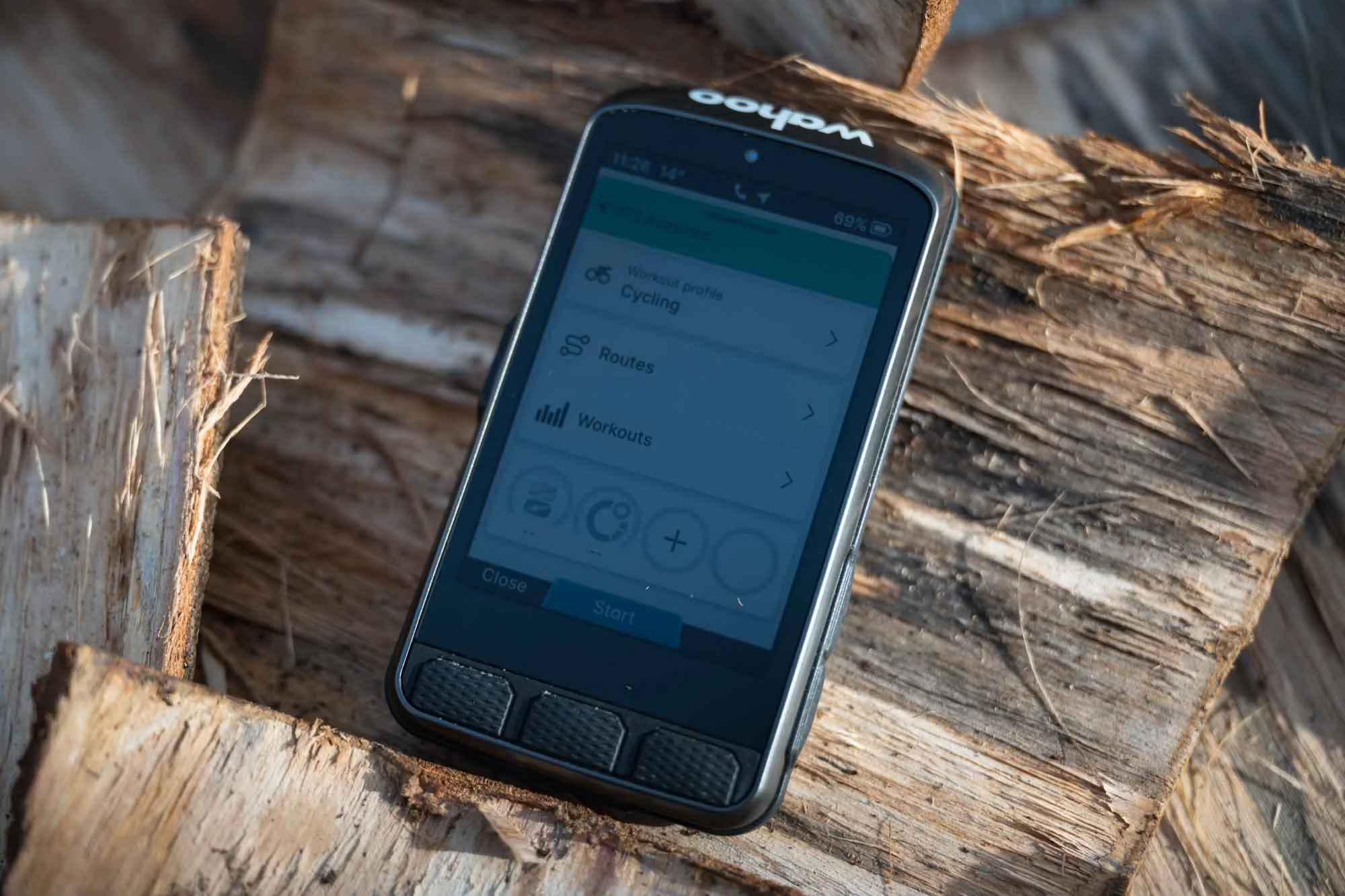
A couple of the smaller irritations we flagged at launch have been smoothed over, but not all. Custom waypoints are now supported, which is a welcome fix. Yet on-device route sorting and management still feels less flexible than it should, and the Ace remains more dependent on the Wahoo app than its rivals; changing data fields and settings largely means pulling out your phone rather than doing it on the device, which continues to grate when you just want to add a climbing or sunset field mid-ride.
The Wind Sensor: Gimmick No More?
Here's the update we were most curious about. At launch, the wind sensor was the Ace's most intriguing feature and its most disappointing. It fed a "Wind Dynamics" metric that showed a raw airspeed figure against a blue-to-red colour backdrop, and our chief gripe was that it made you do mental arithmetic; if I'm riding at 35kph into a 25kph airspeed, just tell me I've got a 10kph tailwind rather than showing me a colour.
Wahoo has, thankfully, listened. The reworked Wind Dynamics now leads with a "Wind Impact" value that shows directly how much a headwind, tailwind or draft is affecting your speed, no head-maths required, backed by supporting fields like Potential Speed, Wind Grade and Resistance Ratio. It's a proper answer to exactly the complaint we had, and the presentation is far more digestible than it was.
That said, spend real time with it and the sensor still adds surprisingly little to your riding. The fundamental limitation is physical: it relies on the wind hitting the device more or less head-on, so it's happiest measuring a clean headwind or tailwind and gets easily confused the moment a crosswind enters the picture, which in the real world is most of the time. The upshot is that it's most confident telling you things you already know, and least reliable in exactly the gusty, swirling conditions where a bit of extra insight might actually help. It's still not the real-time aero-drag (CdA) tool some hoped for at launch, and for us it remains a feature you could happily live without.
We’d mostly forgotten about it until on one patricianly wet ride, the sensor filled with water and constantly told us that we had a 40kph tailwind. One can dream.
Battery Life
Here's a genuine improvement since launch: battery life has noticeably got better through firmware. Where we once struggled past 12 hours, the Ace now stretches considerably further in the right conditions. The catch is that it varies enormously depending on whether a phone is connected. Ride with your phone tethered over Bluetooth and the drain climbs sharply; leave the phone at home, or disconnected, and the figures improve dramatically. It's a big swing, and it means the 30-hour headline is achievable only in fairly specific circumstances rather than day to day. Wahoo's aggressive power-saving modes still lean on dimming or dropping the backlight, which on a screen already lacking peak brightness leaves it hard to read in anything but full sun. In short, it's better than it was, but manage your expectations, and your phone connection, accordingly.
Sensor Dropouts
One frustration that firmware hasn't fully cured is sensor reliability. Even in 2026 we found paired sensors would drop out mid-ride for no obvious reason, and irritatingly the only reliable fix was a full reboot of the device rather than a quick reconnect. On a £500-plus computer whose whole job is to log your ride, losing power or heart-rate data halfway round a loop and having to restart is exactly the sort of thing that erodes trust. It doesn't happen every ride, but it happens often enough to note, and it's a reminder that the Ace's software, while hugely improved, still has rough edges.
A word on phone connectivity though, much like random sensor dropouts, our phone would regularly drop in and out of connectivity with a full reboot of the app the only way to restore the link.
Size, Weight and Screen Quality
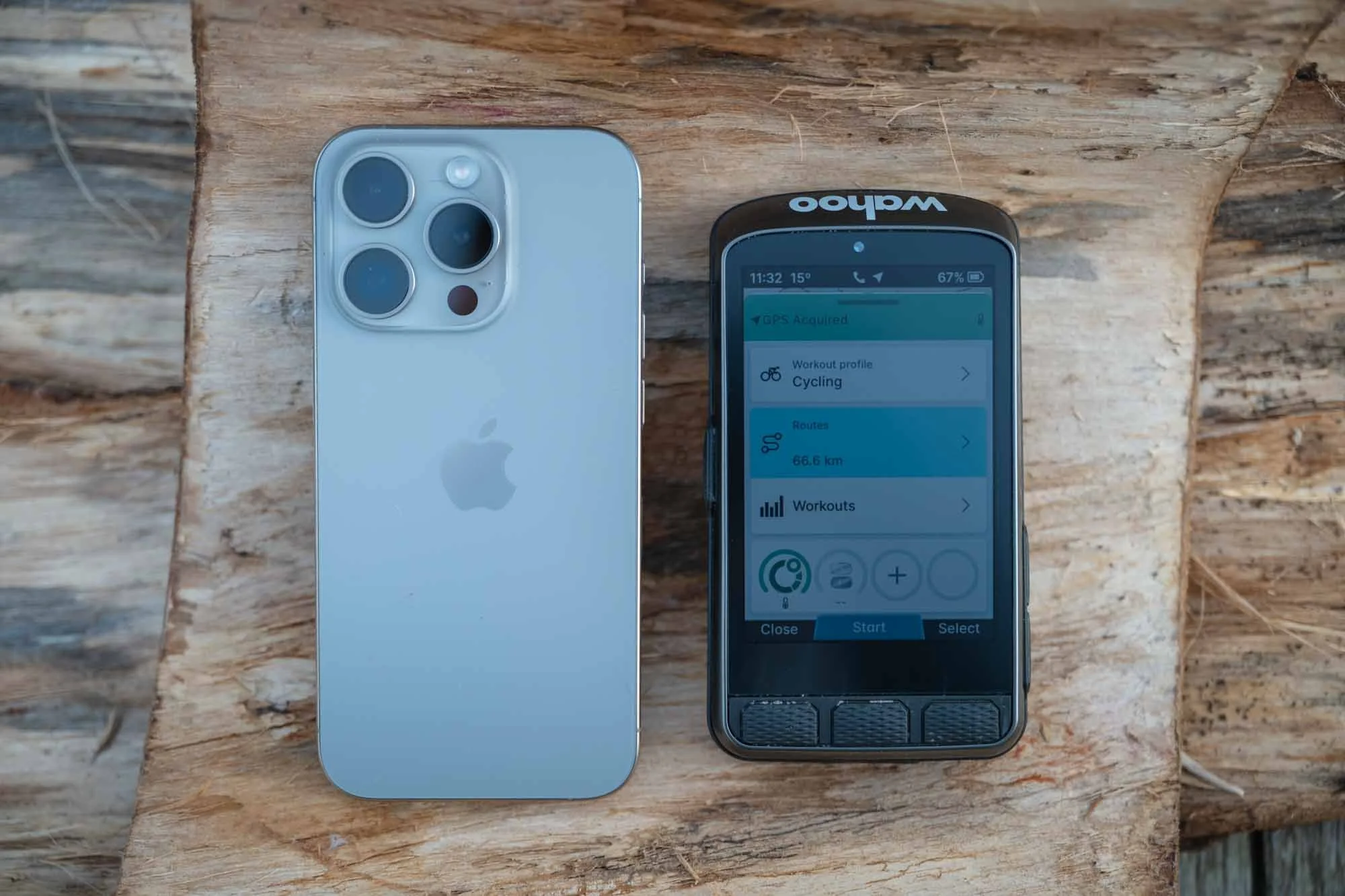
The other things firmware can't fix are size and weight, and the Ace is still a big beast. At 208g it dwarfs the 118g Karoo 3 and 161g Edge 1050, and the front of the unit sits almost level with the hoods. Riders with integrated computer mounts should measure carefully; even the metal mount in the box occasionally slipped on rougher terrain during our testing. The screen, too, remains a step behind; peak brightness trails the Garmin and Hammerhead, and it's the least responsive touchscreen of the three, something we noticed keenly after daily-driving a Karoo 3. It's also easily flummoxed by water; let rain sit on the display and it starts registering phantom presses, merrily jumping between screens and pages on its own. There is a rain lock to disable the touchscreen, but it's far from intuitive to find and engage in the moment, which rather defeats the point when the heavens have already opened. Thankfully Wahoo kept their proper physical buttons, so glove-friendly navigation is still very much on the menu and gives you a way to drive the device when the touchscreen throws a wobbly.
The Bell and the Little Touches
It's worth repeating praise for one of our favourite features: the bell. It's a simple thing, and yes, Garmin got there first, but a built-in bell is genuinely, repeatedly useful on shared paths, and it's a lovely example of Wahoo thinking about how people actually ride.
Is the Wahoo Elemnt Ace Worth It in 2026?
Two things have altered the equation since launch. The software is far more complete, and the price has fallen; while the RRP is still £549, the Ace is now routinely discounted to somewhere between £375 and £450, which makes the hiccups somewhat more palatable. At full whack against a cheaper, smaller, brighter Karoo 3, it was a hard sell. Nearer £400, with the wind data fixed and the bugs largely squashed, it makes far more sense for the right rider.
Wahoo Elemnt Ace Review: Verdict
At launch we told you to steer clear until Wahoo had refined the Ace with software updates. Well, they have, and this revisit reflects it. The maps and navigation remain a genuine highlight and the user experience is mostly positive. However the Wind Dynamics data is fairly useless and the sensor dropouts are just straight up irritating.
It's still too big and heavy for our taste, the screen still isn't as bright or responsive as its rivals, and the app dependency still nags. But if you need a device mainly to tall you where to go and how to get there, the Elemnt Ace has quietly become the computer it always should have been. Just go in with your eyes open about the hardware compromises that no firmware can undo and keep an eye out for a bargain.
It’s a hard pass from us at full RRP, but it’s a valid alternative if you’re savvy and can find one around £350.
Also Consider
The Hammerhead Karoo 3 remains our personal favourite of this generation. At £449 it pairs a beautiful screen with a smaller form factor and a reliability that just works when you need it. (hammerhead.io)
For those embedded in the Garmin ecosystem, the Edge 1050 is hard to beat for features, and if you want ultimate battery life, the Edge 1040 Solar is unparalleled, with up to 90 hours in battery-saver mode. (garmin.com)